
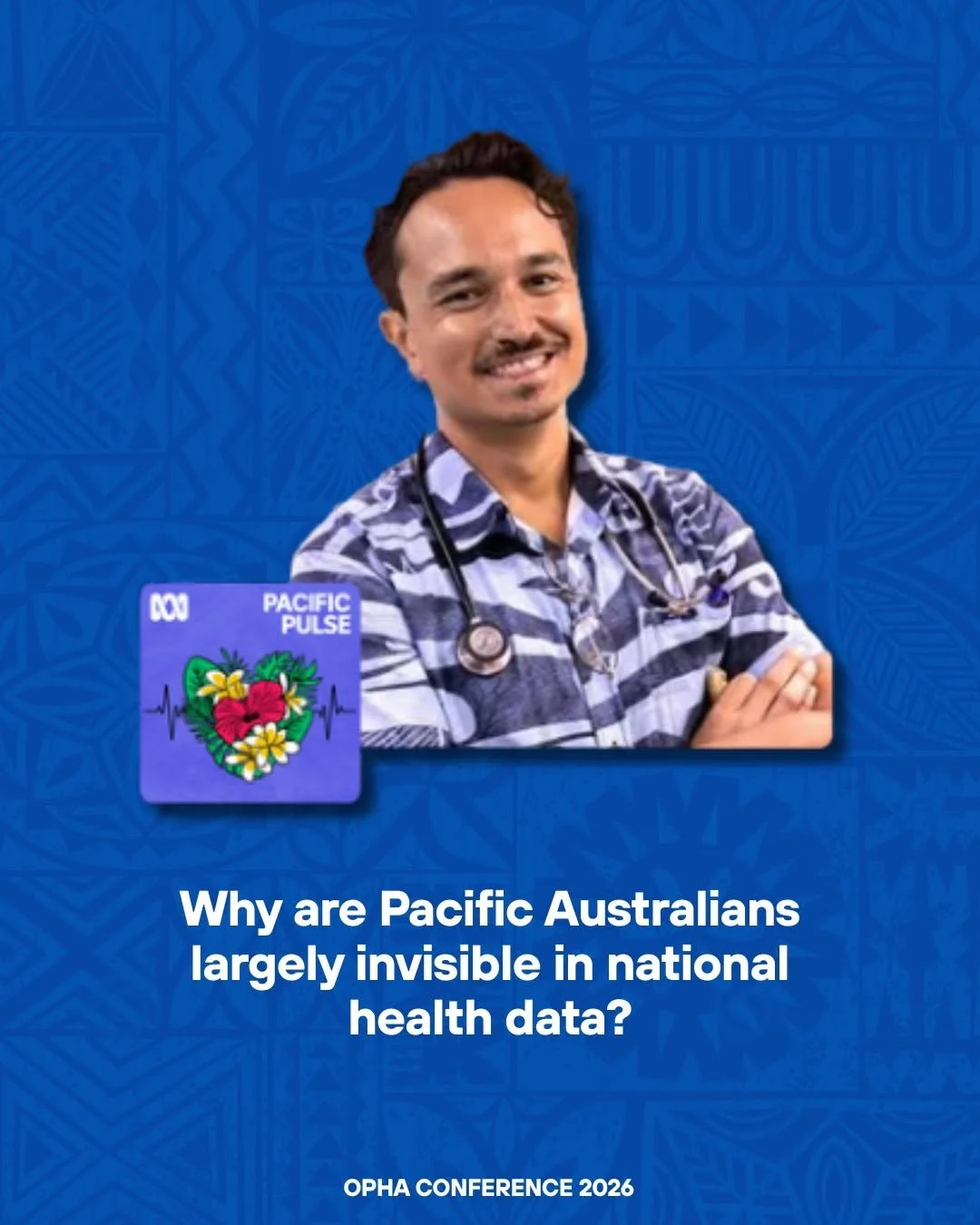
Pacific people have been part of Australia’s social and cultural fabric for generations, but in the health system we are still often difficult to see. Part of the problem is the way Pacific identity is recorded: different datasets can use different definitions, with some including communities such as Indo-Fijians, while others may classify Māori separately or group them within broader Pacific categories.
The result is a health picture that can shift depending on which dataset is being used, making it harder to compare outcomes, identify disparities and plan services with confidence.
In the opening address at the Oceania Pacific Health Association Conference in Brisbane, emergency doctor and Australian-Rotuman health leader Dr Matt Bray examines what that statistical invisibility means in practice and solutions that centre our own health workforce.
